Serenade Project: Collaboration, learning, growth
February 1, 2026
Serenade Project: Opportunities
February 23, 2026
1. Who Are We?
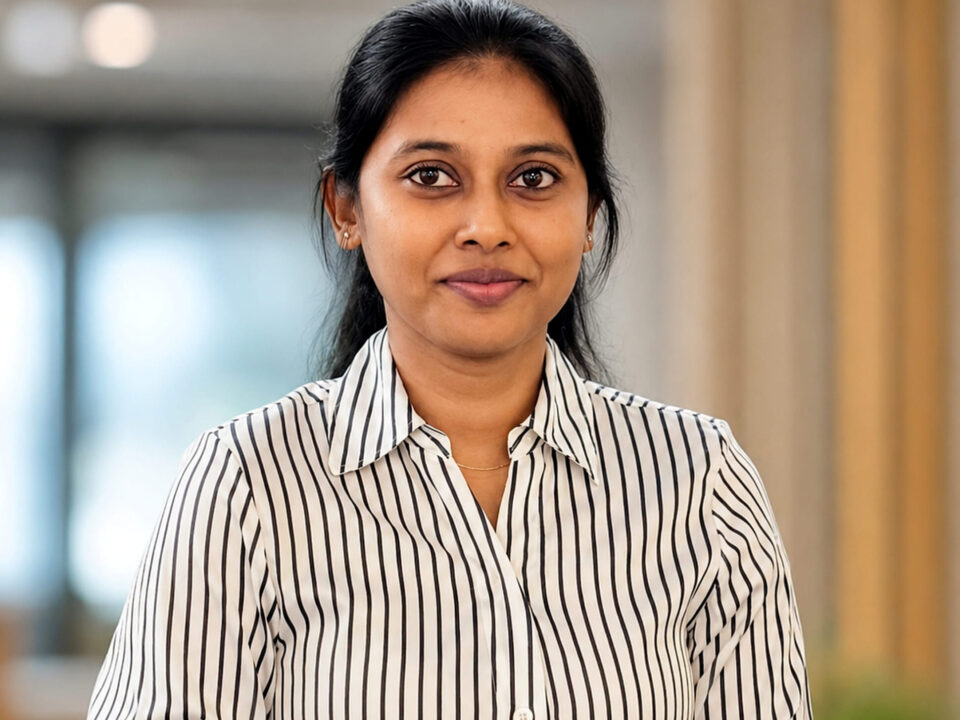
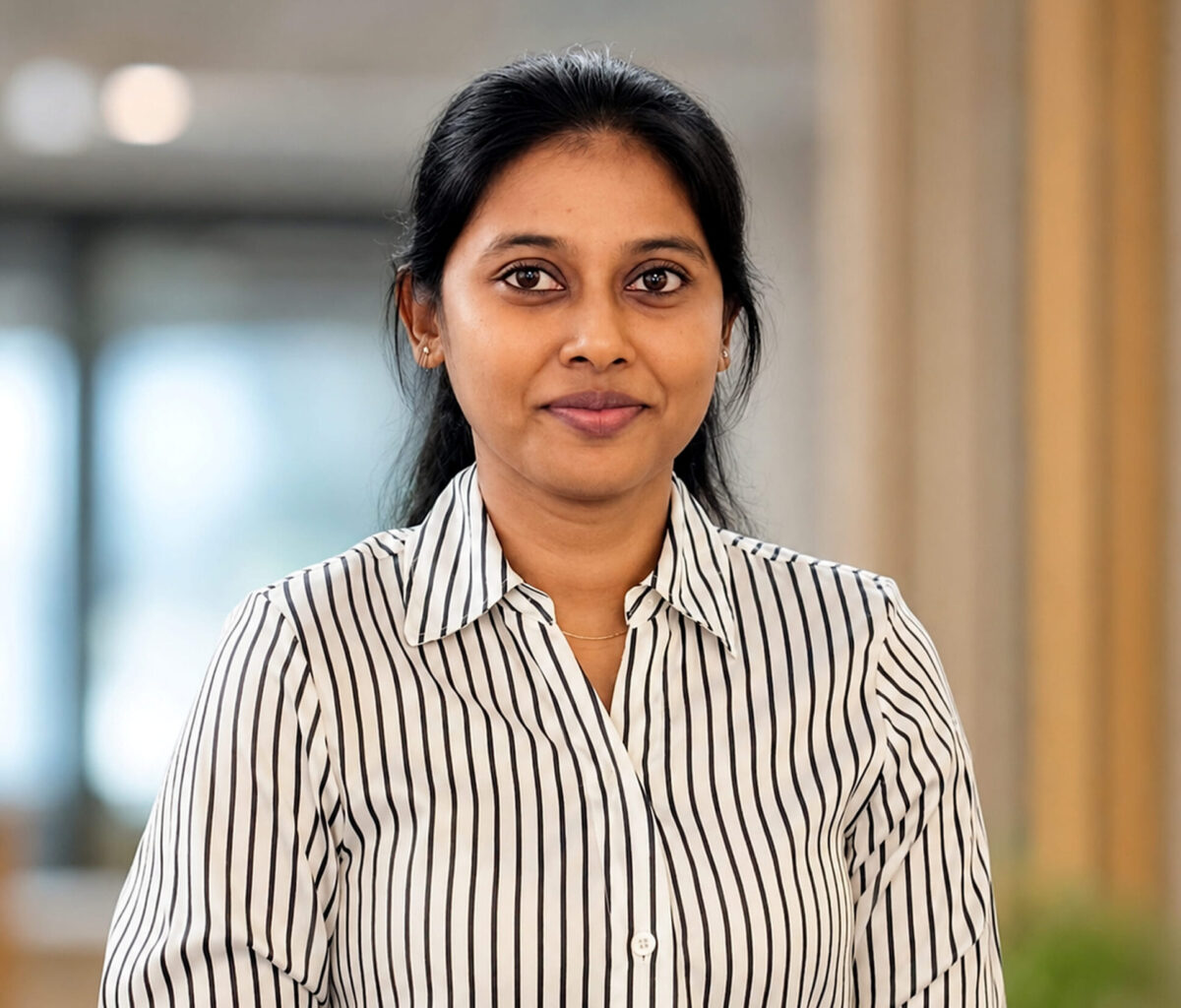
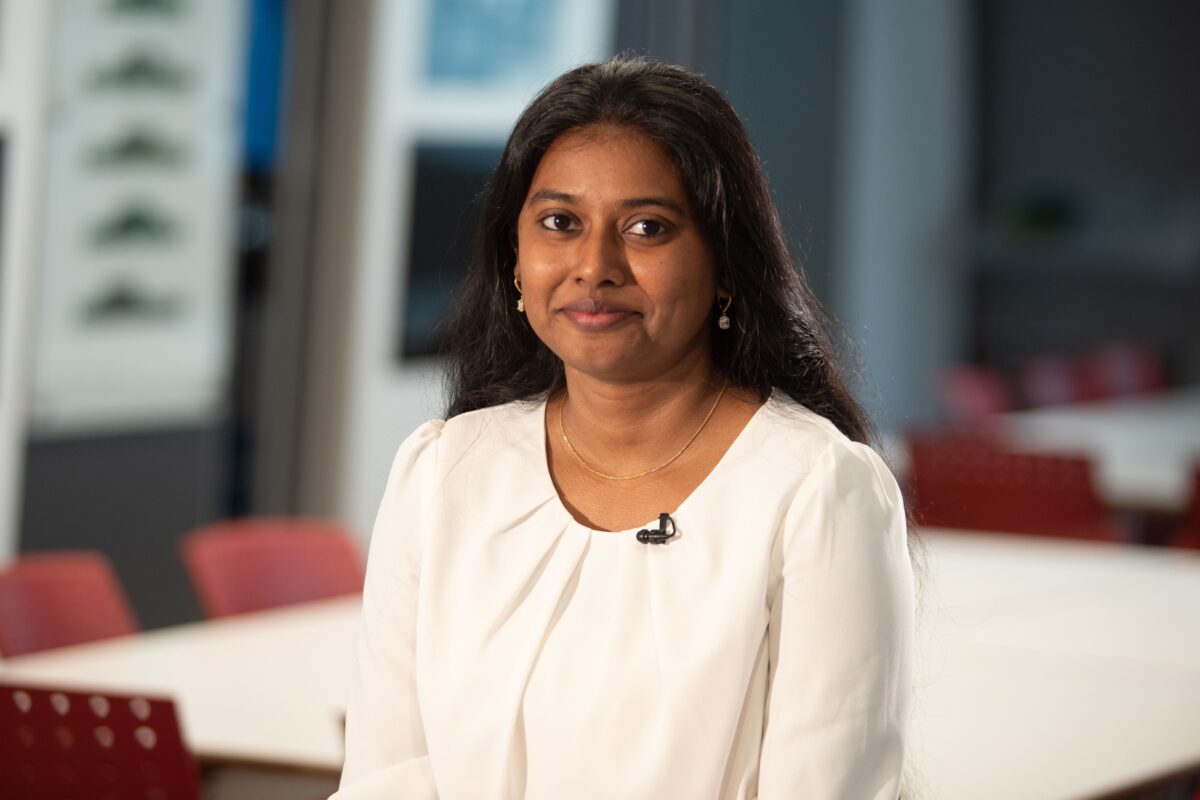
Revathy Gurusamy’s journey into science began in India, where she first discovered a love for the invisible world of microbes during her Bachelor’s degree in Biotechnology. She was captivated by the idea that something so tiny could have such a powerful influence on our food, our health, and the world around us. That curiosity didn’t just spark an interest; it set her on a path toward a life in science and an international career shaped by discovery.
That curiosity took her all the way to Norway for a Master’s degree in Biotechnology at the Norwegian University of Science and Technology (NTNU). Norway became the place where her scientific identity truly formed and crystallised. Immersed in a multicultural research environment, Revathy gained solid, hands-on experience in food microbiology, carrying out projects in food science, food quality, and food safety.
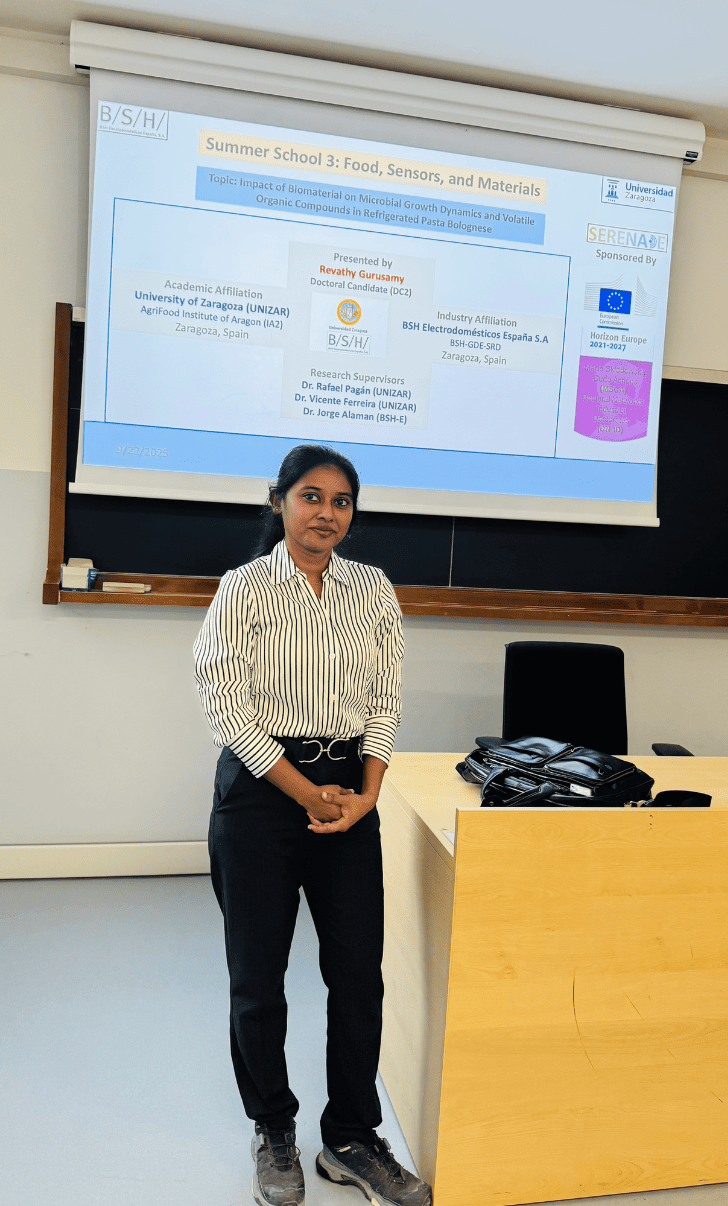
Today, she continues that mission in Spain as a Marie Skłodowska-Curie Doctoral Candidate (DC2), pursuing an industrial PhD at BSH Zaragoza together with the University of Zaragoza. She chose the SERENADE MSCA Doctoral Network because it offered a rare blend of everything she cared about: strong science, real-world impact, and a commitment to sustainability. The consortium brings together experts from food microbiology, chemistry, sensor engineering, material technologies and smart appliance innovation from across Europe, exactly the kind of multidisciplinary environment where new ideas can grow from laboratory to industry scale.
Moving to Spain was not just a career step; it was a conscious decision to work where science meets everyday life. At BSH, one of Europe’s leading appliance companies, Revathy can see how her research may one day reach millions of households. Her work directly contributes to the development of smart refrigerators that help people assess food freshness and avoid unnecessary food waste.
For Revathy, joining SERENADE meant choosing science that has a direct impact on society – science that aligns with the United Nations (UN) sustainability goals, encourages responsible food consumption, and supports a future where reducing food waste is more than an aspiration. With the UN calling for a 50% reduction in global food waste by 2030, her research plays a key role in advancing the development of smart refrigerators at BSH, helping to reduce food waste and enhance sustainability.
2. The SERENADE Project and Work Package 2
SERENADE aims to develop innovative, sustainable sensing solutions that monitor food quality in real time and provide consumers with reliable information on freshness and spoilage. With partners spanning universities, industries, and research centres across Europe, SERENADE is a vibrant network where microbiologists, chemists, engineers, and materials scientists collaborate together.
Within this framework, Revathy’s PhD project
“Prediction of the Quality and Shelf Life of Cooked Meals Stored Under Refrigeration through Modelling of Headspace volatile organic compounds (VOCs) and Microbial State”—focuses on a central challenge:
How can we know, without opening a box or touching the food, whether leftovers in the refrigerator are still good to eat?
Revathy’s research addresses this challenge through a novel, interdisciplinary approach: using volatile organic compounds (VOCs) as non-invasive indicators of food freshness, spoilage stages, and microbial dynamics. This research goes beyond the current state of the art by integrating microbiology, analytical chemistry, and sensor science to enable real-time, intelligent food-quality monitoring in smart refrigerators.
Her work involves:
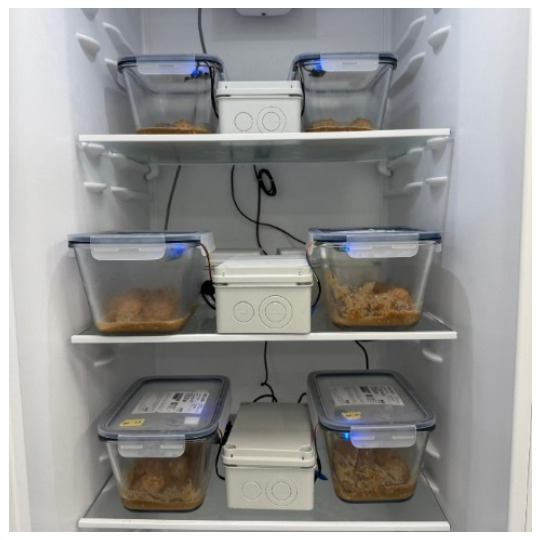
• Studying microbial growth dynamics in refrigerated cooked foods and leftovers
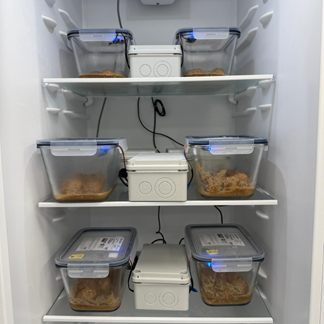
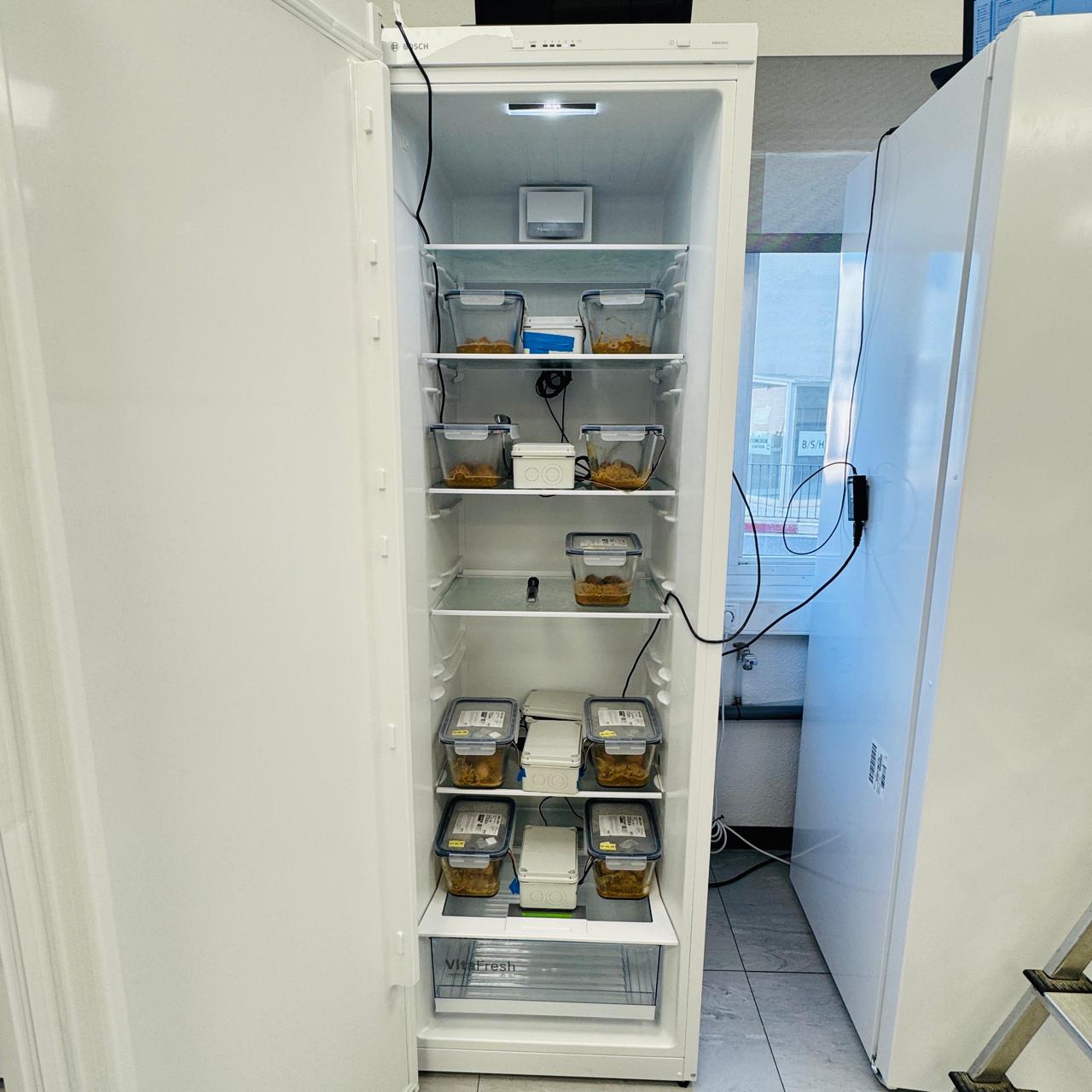
• Analysing the VOCs released from the food to the container headspace over time
• Building statistical models that connect VOC profiles with microbial growth
• Supporting sensor validation for smart food-storage systems
The goal is to build a reliable framework that enables smart fridges or containers to determine the stages of food freshness independently.
3. Project Progress and Where We Are Heading
Revathy’s project is well underway. She has tested several cooked food items, tracked their freshness–spoilage progression, and generated datasets linking microbial behaviour with VOC profiles. These findings are helping pinpoint the most reliable indicators of spoilage—information crucial for building smart sensing systems.
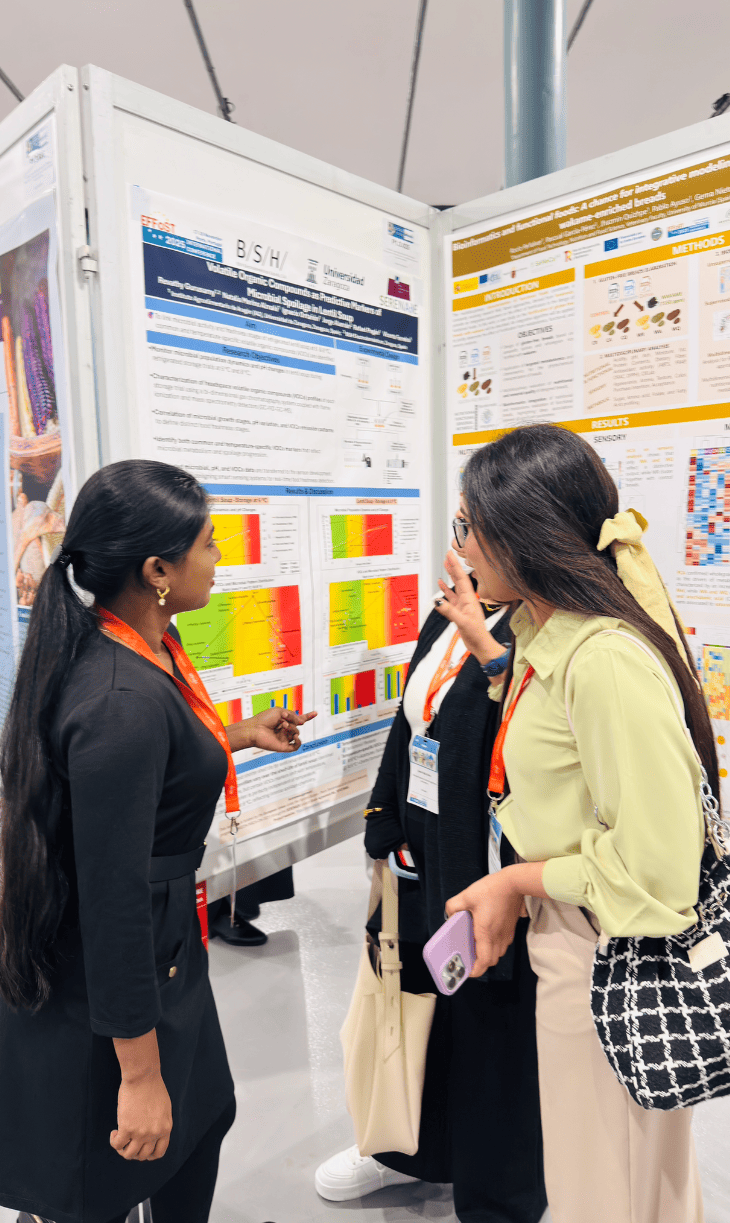
She has also shared her work widely,
• EFFoST 2025 International Conference
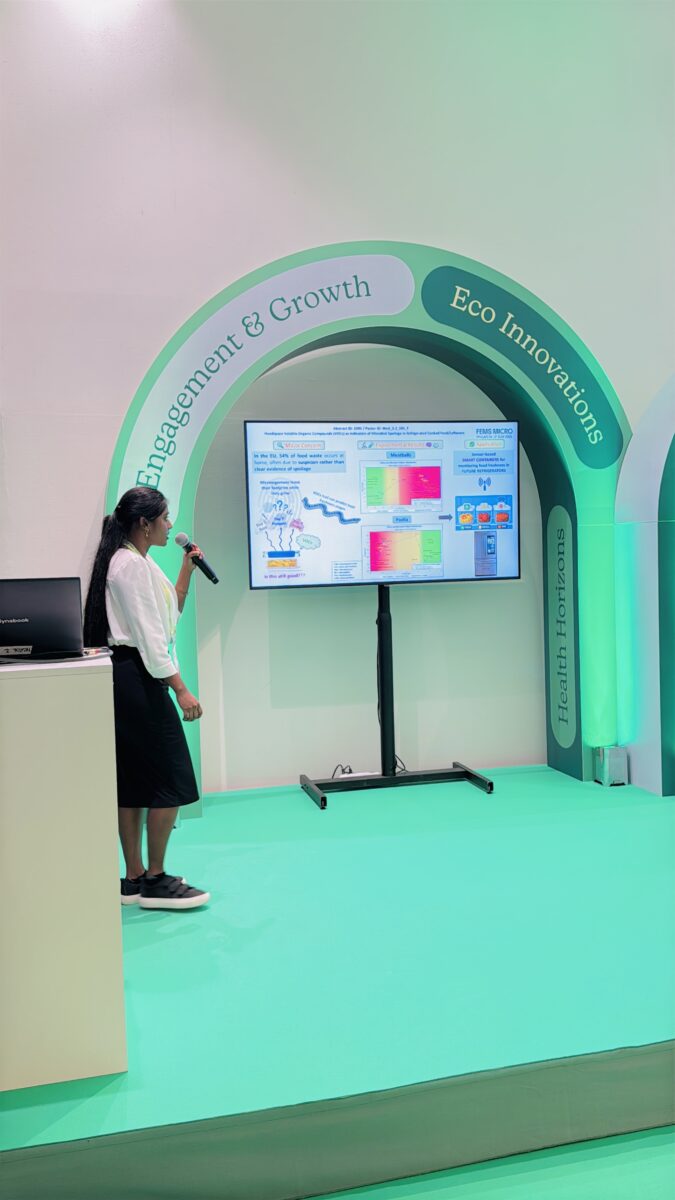
• FEMS 2025 International Conference
• SERENADE Summer Schools
• Several training and networking events within consortium
Next steps include:
• Developing prediction models for food freshness stages
• Collaboration in validating sensor prototypes in realistic household storage conditions
• Writing scientific articles for publication in international journals
Predicting Freshness in Cooked Foods: How Science Can Tell Whether the Leftovers in Your Fridge Are Still Good to Eat?
Revathy’s work aims to redefine how we determine food freshness and spoilage by developing VOCs-based microbial fingerprinting models for shelf-life prediction of cooked meals stored under realistic household refrigeration conditions. While VOCs monitoring has already been explored in raw meat and dairy products, it is rarely applied to complex cooked food matrices, especially those stored without preservatives, despite these being highly perishable and commonly wasted at the household/consumer level.
In her recent study, titled “Headspace Volatile Organic Compounds (VOCs) as Indicators of Microbial Spoilage in Refrigerated Cooked Food/Leftovers” at the FEMS 2025 Conference, the research results demonstrated how microbial dynamics and VOCs profiles change in different food items. Using gas chromatography-mass spectrometry (GC-MS), selective microbial enumeration, and statistical analysis, Revathy has identified specific VOCs that serve as early markers of spoilage. These findings lay the groundwork for VOCs based sensing platforms, bringing us closer to the development of sensors and smart refrigerators capable of real-time food freshness detection.
This approach goes beyond existing microbiological testing methods by offering a non-invasive, dynamic, and predictive solution that helps to reduce food spoilage and food waste. Her research directly addresses the need for novel technologies to reduce food waste while promoting circular-economy principles, which is in line with the European Union’s Farm to Fork Strategy: https://food.ec.europa.eu/horizontal-topics/farm-fork-strategy_en
Application and Industry Relevance
The potential impact of this research is enormous. Every day, households throw away refrigerated food that is still good to eat, simply because there is no reliable way to judge its freshness. A VOC-based monitoring system could change this scenario. Instead of relying on guesswork or overly cautious expiry dates, sensors could reveal the real, moment-to-moment condition of our food—helping us eat safely, reduce food waste, and make more informed decisions at home.