How can we transform plastic waste from household appliances into safe materials for food packaging?
June 29, 2026
Reduced-energy processing of PLA/Talc biocomposites: Comparing in-mold crystallization and IR annealing
July 20, 2026
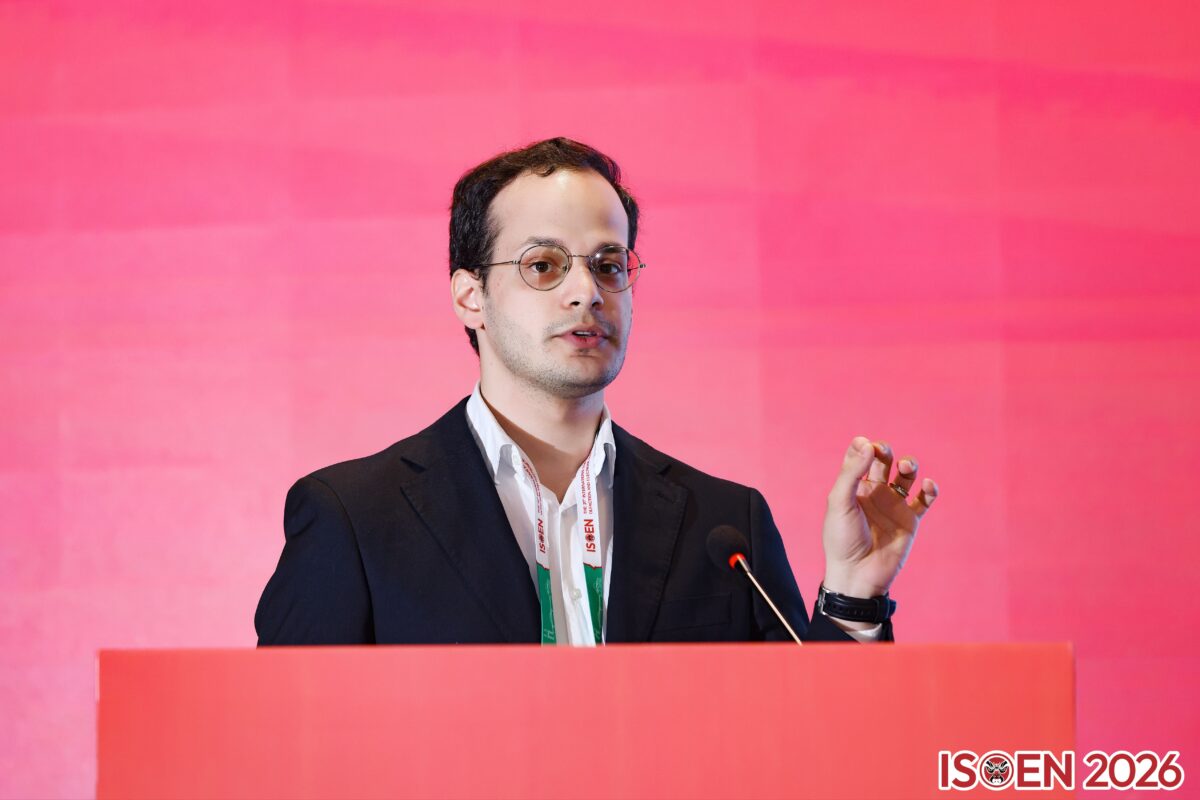
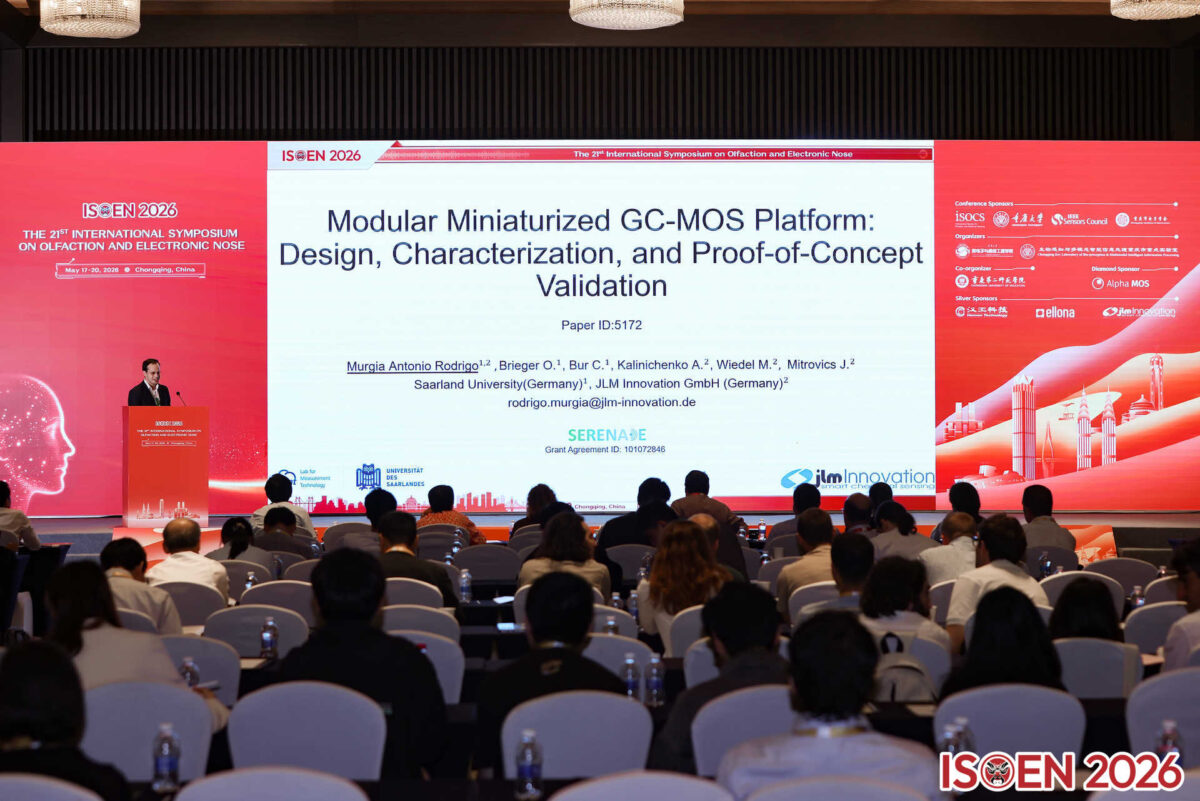
DC4 Antonio Rodrigo Murgia delivered two oral presentations at the ISOEN 2026 conference in Chongqing, China (May 17–20), based on the following conference papers:
“Chromatogram Peak Detection Using a MOS Sensor with MS Validation”
This presentation reported results from an experimental campaign conducted at Saarland University. The work is based on results obtained during Rodrigo’s thesis and carried out during his internship at JLM Innovation GmbH at the beginning of last year, in collaboration with Saarland University. In this setup, a MOS sensor (ASMLV-P2) and a mass spectrometer were operated in parallel as GC detectors. A mixture of 59 VOCs was analyzed over 20 injections under identical GC-MS conditions, while varying the MOS surface temperature (200, 300, 400, and 500 °C). The MS was used as a reference for peak validation.
Main results of the offline data analysis included:
- Density-based clustering of peaks corresponding to the same compounds across injections
- Retention time drift observed in GC chromatograms
- Detection trends as a function of retention time, showing correlations with system sensitivity
- Correlation between sensor latency and aging/poisoning effects
“Modular Miniaturized GC-MOS Platform: Design, Characterization, and Proof-of-Concept Validation”
The presentation covered preliminary results of the mini GC-MOS system that JLM Innovation GmbH and Saarland University developed in collaboration. Rodrigo presented the system architecture, electronics, injector, detector, and MOF preconcentrator, along with the temperature and fluidic control software. He also demonstrated a GC simulation tool developed at JLM Innovation, including the underlying thermofluid dynamics model used for pre-experimental optimization.
Preliminary experimental results demonstrated the separation of aldehydes (from propanal to heptanal), revealing detection capabilities in the ppb range.
Future work directions include:
- Calibrating the mini GC-MOS system at Saarland University
- Exploring a potential extension towards 2D GC with stop-flow modulation if separation proves insufficient
- Applying the system to food analysis within the SERENADE project, focusing on cooked meals and VOC markers that Revathy Gurusamy and Luigi Masi identified (e.g., acetaldehyde, acetone, ammonia, carbon monoxide, ethanol, ethyl acetate, formaldehyde, hydrogen, isopropanol, limonene, methanol, n-hexane, toluene).
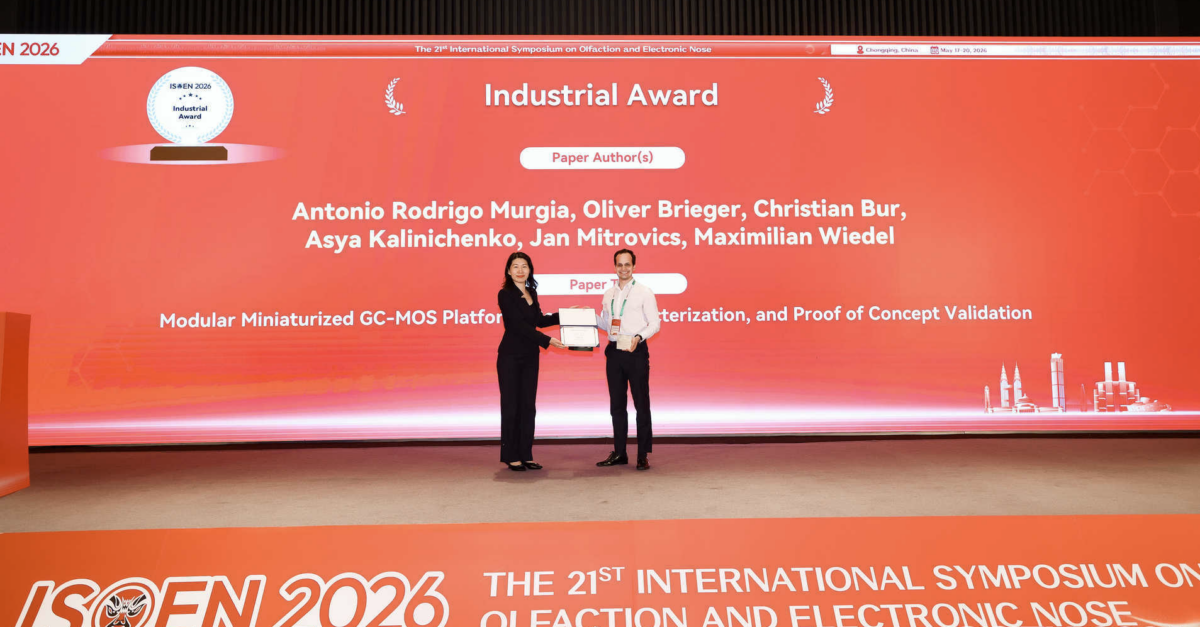
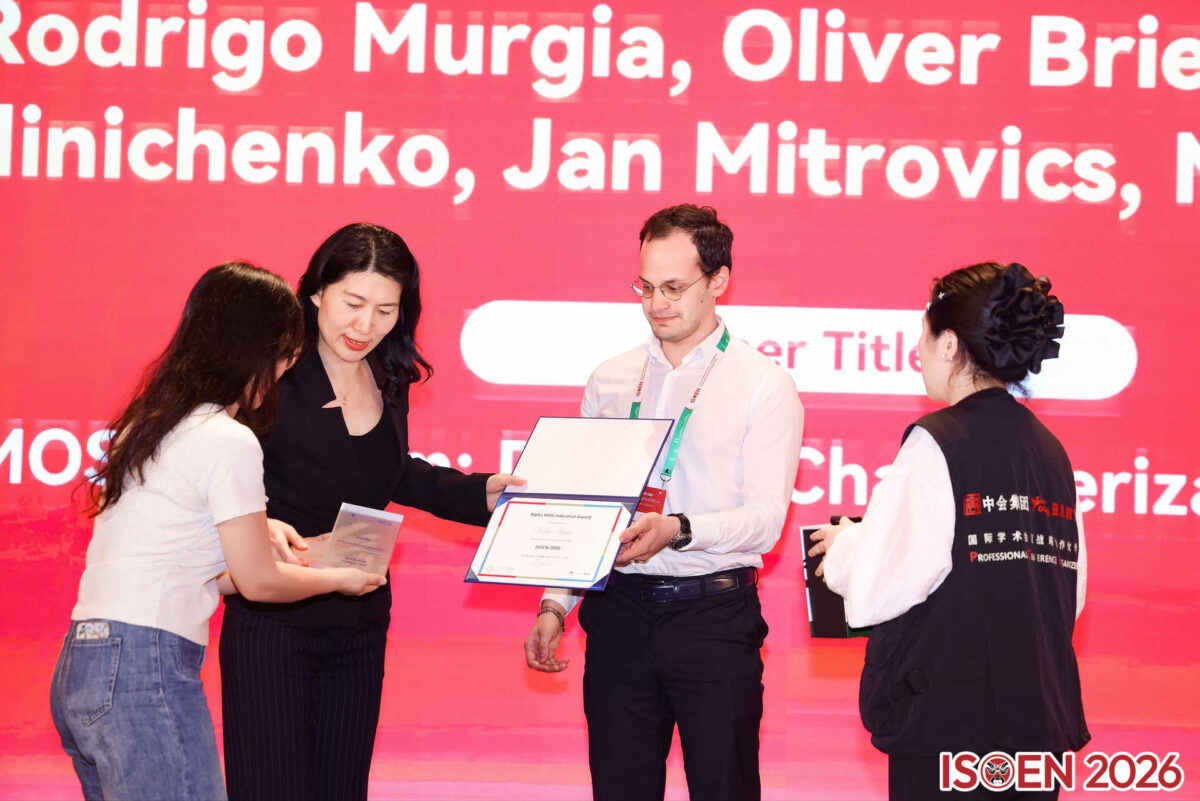
Thanks to this presentation, the committee awarded Rodrigo the Industrial Award at ISOEN 2026