How can smart technology and sustainable materials transform the way we manage food at home?
May 19, 2026
How Science Knows When Your Fridge Food Is About to Go Bad
June 5, 2026
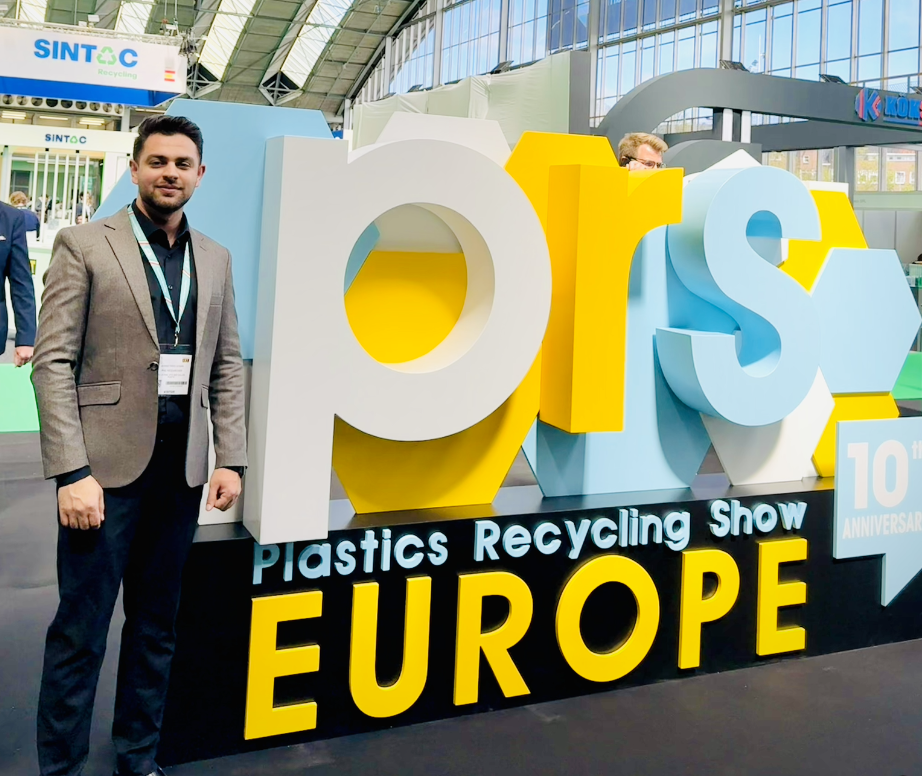
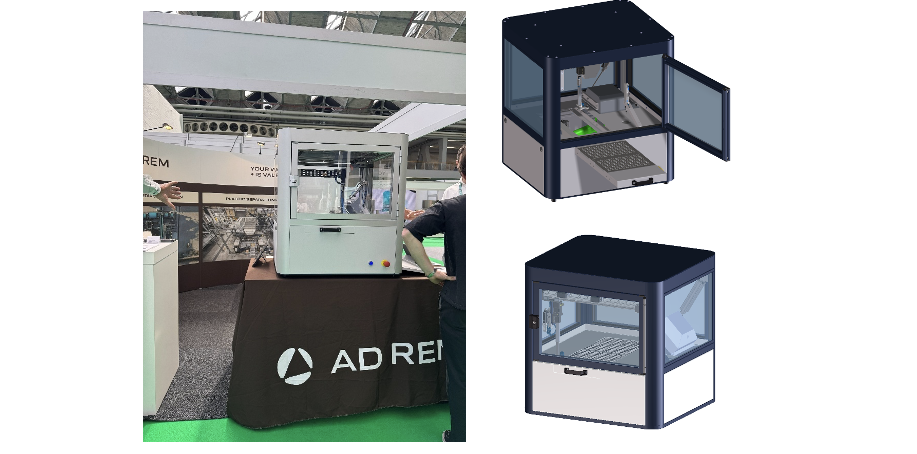
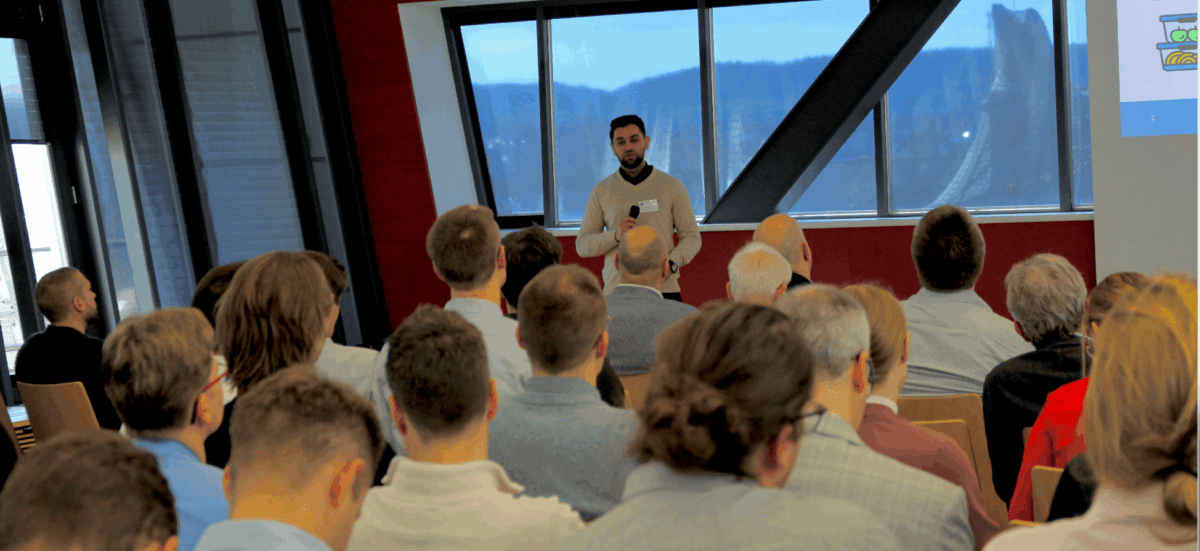
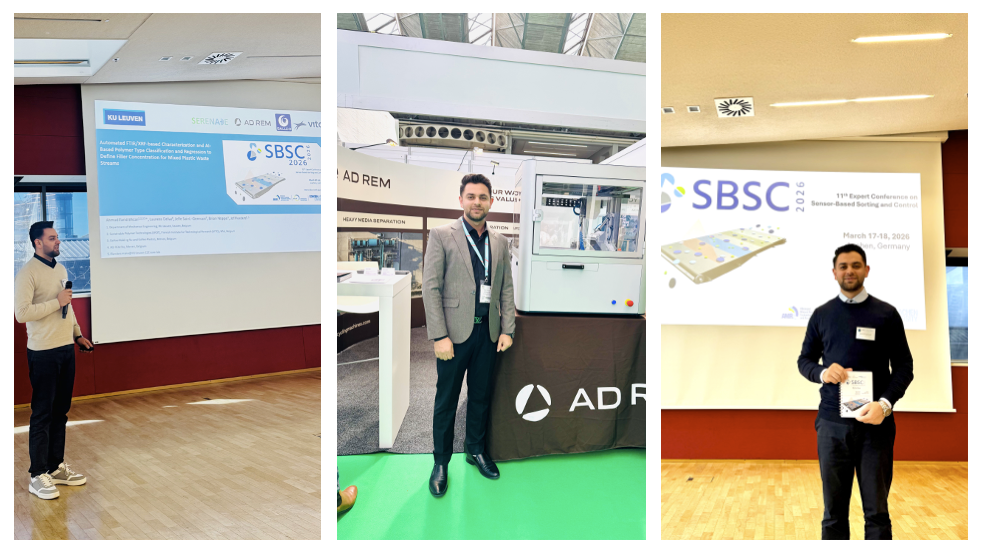
As part of the SERENADE Project, PhD Candidate Ahmad Farid Ehsan presented his research at Sensor Based Sorting and Control 2026 (SBSC 2026), held on 17–18 March 2026 in Aachen, Germany. His work focuses on the development and application of an automated FTIR/XRF-based characterization device with robotic handling, combined with artificial intelligence, to improve polymer identification and filler concentration estimation in complex mixed plastic waste streams. The technology has also progressed beyond the research environment: AD REM has commercialized the automated plastic flake analysis concept and presented the device at the Plastic Recycling Show Europe in Amsterdam, highlighting its relevance for industrial recycling applications.
Efficient recycling of plastics from mixed waste streams remains one of the key challenges in the transition towards a circular plastics economy. Waste electrical and electronic equipment plastics, as well as other post-consumer and industrial plastic streams, often contain a complex mixture of polymers, additives, fillers, pigments, and contaminants. These variations make accurate material identification difficult, especially when high-throughput industrial sorting and recycling processes are required.
Within the SERENADE Project, Ahmad Farid Ehsan’s PhD research addresses this challenge through an integrated automated characterization workflow. The research combines Fourier-transform infrared spectroscopy (FTIR), X-ray fluorescence spectroscopy (XRF), and robotic sample handling to analyse plastic waste samples in a faster, more consistent, and more scalable way.
A central outcome of the work is the use of an automated FTIR/XRF device designed to support high-throughput characterization of mixed plastic waste streams. The robotic handling system enables systematic movement and measurement of plastic samples, while FTIR provides information related to polymer identity and filler information and XRF provides elemental information linked to additives, and inorganic content.
The device concept has been commercialized by AD REM as an automated plastic flake analyzer (OWL), demonstrating the translation of research-driven characterization needs into practical industrial equipment. Its presentation at the Plastic Recycling Show Europe in Amsterdam 2026 further underlines the industrial relevance of combining automated sample handling, FTIR, XRF, and data-driven analysis for plastic recycling.
The presented work, titled “Automated FTIR/XRF-based Characterization and AI-Based Polymer Type Classification and Regression to Define Filler Concentration for Mixed Plastic Waste Streams”, shows how automated spectral data collection can be combined with artificial intelligence models. In this workflow, AI is used as a data-analysis layer to interpret the FTIR and XRF measurements, classify polymer types, and estimate relevant material properties such as filler concentration and additives present in the particles.
This is particularly important for recycling applications, where the presence of mineral fillers such as talc or calcium carbonate can influence processing behaviour, product quality, and the potential reuse pathway of recycled plastics. By generating more detailed material information, the automated FTIR/XRF workflow can support better sorting, quality control, and material valorisation decisions.
The research therefore contributes not only to AI-assisted polymer classification, but also to the practical development of automated characterization technologies for plastic recycling. The combination of robotics, FTIR, XRF, and machine-learning models provides a route towards more reliable and data-driven assessment of complex waste-derived plastic streams.
Key Research Messages
- The research demonstrates an automated FTIR/XRF-based characterization device with robotic sample handling.
- FTIR measurements support polymer identification, filler type and filler estimation while XRF measurements provide elemental information relevant to additives, pigments, and inorganic content.
- Robotic handling enables more consistent and higher-throughput analysis of plastic waste samples.
- AI-based models can support polymer type classification and filler concentration estimation from the generated spectral data.
- The integrated workflow can support improved sensor-based sorting, recycling quality control, and circular plastics decision-making.
Presenting these findings at SBSC 2026 provided an opportunity to share both the automated characterization approach and the AI-based analysis workflow with the sensor-based sorting and recycling community. The broader technology development has also reached an industrial audience through AD REM’s commercialization and presentation of the automated plastic flake analyzer at the Plastic Recycling Show Europe in Amsterdam. Together, these developments show how robotic handling, FTIR, XRF, and artificial intelligence can be combined to support more accurate, scalable, and data-driven recycling technologies.
Through this research, the SERENADE Project continues to contribute to the advancement of sustainable plastic recycling and the transition towards a more circular plastics economy. The scientific outcomes of this part of the PhD research are also being prepared for an academic paper planned for submission to Sensors, building on the related review article and presenting the automated FTIR/XRF workflow, CNN-based classification and regression models, and material-flow analysis in greater technical detail.