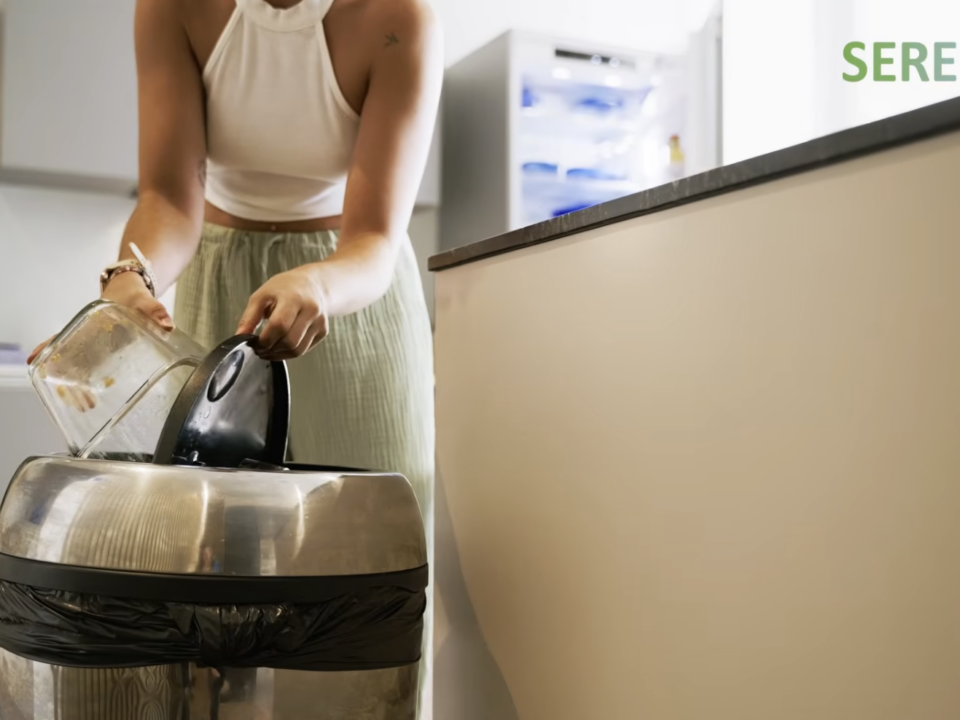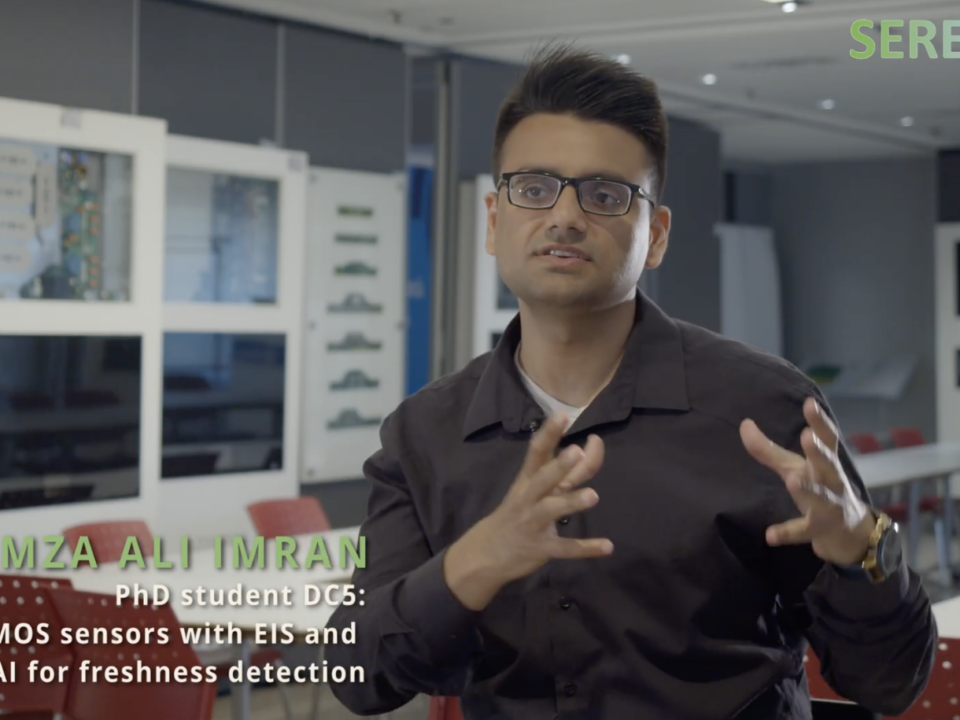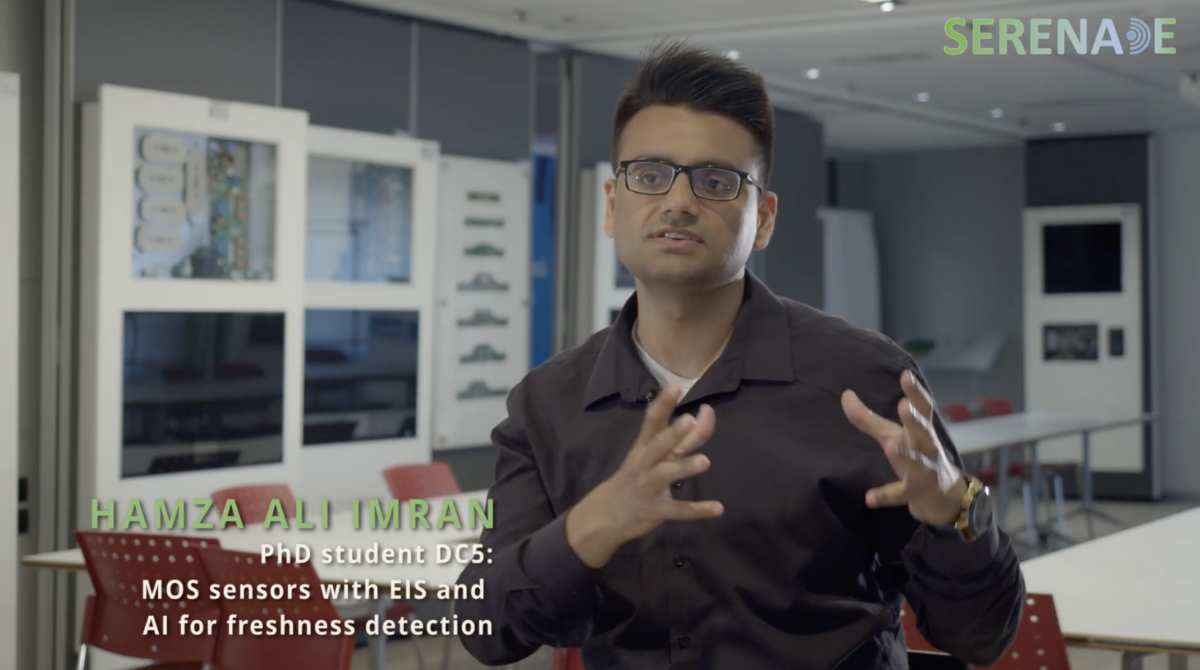
How can sensors “smell” food to help reduce food waste?
August 28, 2026
How can sensor technologies and artificial intelligence help us better understand food freshness?
September 14, 2026
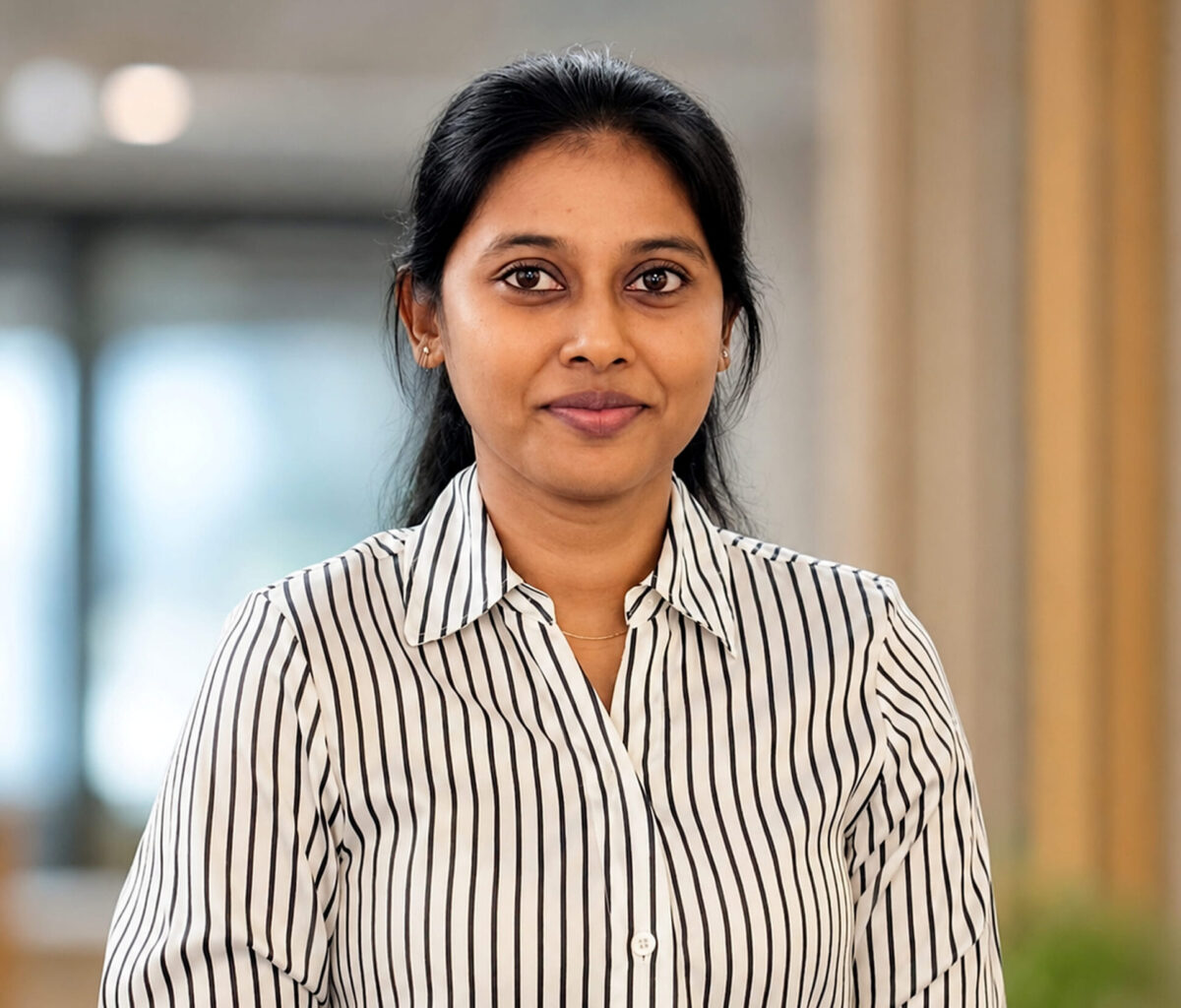
We are pleased to announce that the first research article from Revathy Gurusamy’s PhD work within the SERENADE project has been recently published in Food Research International, a leading Q1 journal in food science with an impact factor of 8.8.
In line with the sustainability-oriented objectives of the SERENADE project, this study investigates how changes in headspace volatile organic compounds (VOCs) reflect microbial spoilage in refrigerated cooked meatballs mixed with almond sauce. This work aims to improve the understanding of freshness-to-spoilage transitions in refrigerated meatballs and provide the scientific foundation for future non-destructive, sensor-based food quality monitoring technologies.
Reducing household food waste remains one of the major sustainability challenges worldwide. Although refrigeration slows microbial growth, consumers often discard cooked leftovers because they are uncertain whether the food is still fresh or has begun to spoil. Conventional microbiological analyses provide reliable assessments of food quality, but they are destructive, time-consuming, and require specialized laboratory facilities, making them unsuitable for routine household use.
To address this challenge, the present study investigated refrigerated cooked meatballs with almond sauce as a representative ready-to-eat (RTE) food stored under realistic household refrigeration conditions (6 °C). Throughout storage, microbial populations, pH, and headspace VOCs were monitored. Volatile compounds were collected on Tenax TA sorbent and analysed by thermal desorption-gas chromatography-flame ionization-mass spectrometry (TD-GC-FID-MS), allowing VOC profile changes to be directly linked with microbial spoilage progression.
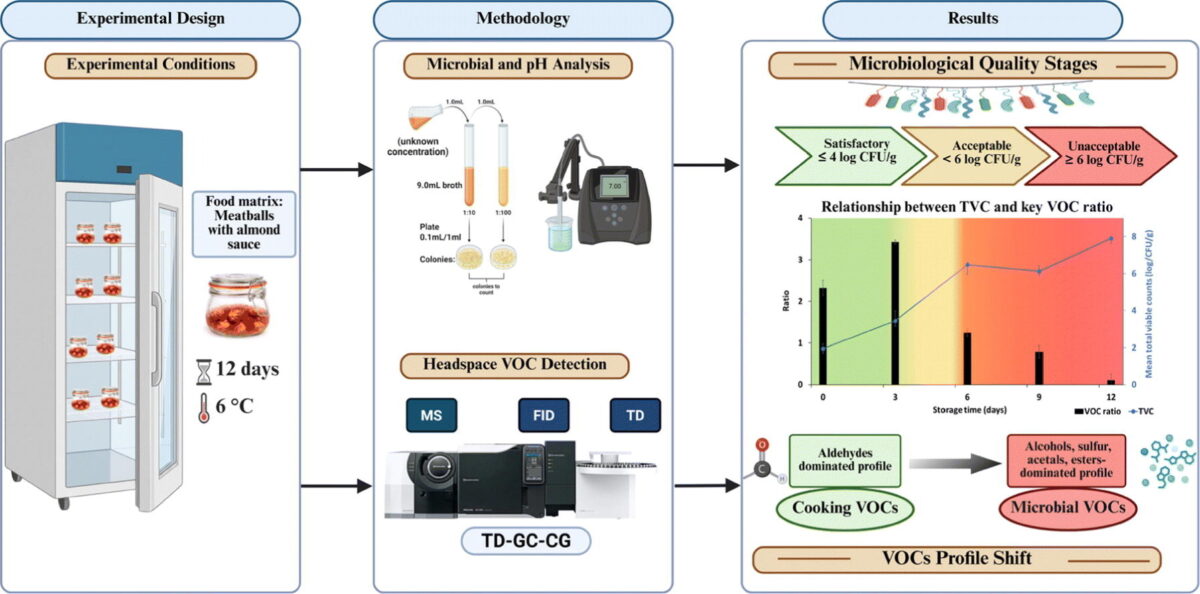
The results revealed a clear transition in both microbial populations and changes in headspace VOC profiles during storage. Fresh samples were characterised by aldehydes generated during cooking, whereas later storage stages showed increasing levels of alcohols, sulfur compounds, esters, acetals, and other metabolites associated with microbial activity. Several volatile compounds, including 1-hexanol, 1,1-diethoxyethane, 2,3-butanediol, and n-hexyl acetate emerged as important markers to distinguish fresh from spoiled samples. Furthermore, the study identified specific VOC ratios that changed significantly before microbial populations reached unacceptable spoilage levels, highlighting their potential as early VOC indicators of imminent spoilage.
These findings provide valuable insight into the relationship between microbial dynamics and volatile production in complex cooked foods. More importantly, they establish a scientific basis for identifying VOCs that can be used to predict microbiological quality before spoilage becomes apparent.
By identifying volatile markers that reflect microbial spoilage, the study supports the development of non-destructive sensing technologies that could help consumers to determine whether refrigerated leftovers remain suitable for consumption without relying solely on expiry dates or subjective sensory evaluation. These findings contribute directly to the broader objectives of the SERENADE project, which aim to develop smart sensing systems and data-driven approaches for predicting food quality and reducing food waste across the food supply chain.
Congratulations to Revathy Gurusamy and all collaborators involved in this work.
Would you like to learn about this research work? Click here to read the full article by our PhD candidate, Revathy Gurusamy.
Reference:
Gurusamy, R., Merino, N., Ontañón, I., Alamán, J., Pagán, R., Ferreira, V. (2026). Evolution of microbial dynamics and headspace volatile profiles for predicting the freshness-to-spoilage transition in refrigerated cooked meatballs.Food Research International, 242(4),Article 120029. https://doi.org/10.1016/j.foodres.2026.120029